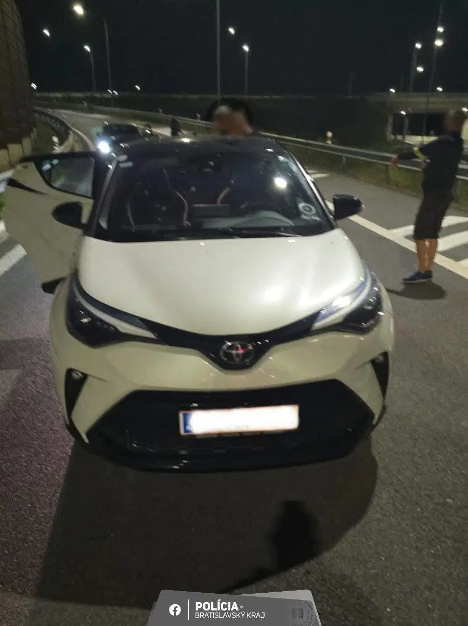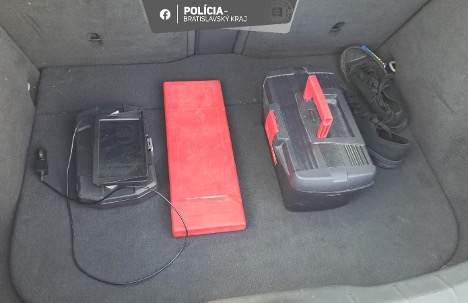
The Slovak police recently intervened at the Jarovce-Kittsee border crossing when they stopped a Volvo vehicle with Polish license plates. Items were found in the vehicle that indicated preparations for motor vehicle theft. Another case involved a Toyota CHR with Austrian license plates that had been stolen in Vienna, Austria. These events confirm that borders are increasingly becoming part of the route by which stolen vehicles leave Slovakia.
What makes these cases exceptional and what do they reveal?
These cases are not isolated. Their significance lies in several details. The vehicles had already been stolen abroad, which points to international networks and organized groups that use borders to transport stolen cars. This means that the methods of theft are becoming more sophisticated (it is not just a matter of breaking in or picking a lock, but of preparation, precise timing, and knowledge of routes across borders). The Slovak Police, in cooperation with their Austrian colleagues, managed to disrupt these operations, which shows that joint actions and international cooperation make sense.